Why Routine Is Important for Dogs: A Simple Guide
Dogs are creatures of habit. Whether it’s breakfast in the morning, a walk after work or settling down in the same place for the night, many dogs quickly learn what to expect from their daily routine.
But why is routine important for dogs?
A consistent daily routine can make everyday life more predictable for your dog. Regular mealtimes, walks, play, rest and bedtime can help create a structure that fits naturally into family life.
The good news is that creating a routine for your dog doesn’t have to be complicated. In this guide, we’ll look at the benefits of a daily routine and some simple ways to establish one that works for you and your dog.
What Is a Dog’s Daily Routine?
A dog’s routine is simply the pattern of activities that happens throughout their normal day.
It might include:
- Getting up at a similar time each morning
- Going outside
- Having breakfast
- Going for a walk
- Playing or spending time with the family
- Having another meal
- Settling down for the evening
- Going to bed
Your dog’s routine doesn’t have to happen at exactly the same time every day. Instead, it’s about creating a reasonably predictable pattern.
For example, you might normally take your dog for a walk after breakfast and another walk in the evening. Over time, your dog learns that these activities are part of their normal day.
Why Is Routine Important for Dogs?
A predictable routine gives your dog an idea of what to expect from their day. The The Kennel Club recommends establishing consistent routines for dogs.
Dogs cannot read a clock, but they are very good at recognising patterns. They learn that certain events tend to happen after others.
Your dog may know that reaching for their lead means a walk is coming, or that you preparing their food means it’s nearly mealtime.
A consistent routine can therefore help your dog understand what happens next throughout the day.
1. Regular Feeding Times
Feeding is one of the easiest parts of a dog’s routine to establish.
Many owners choose to feed their dogs at roughly the same times each day. This can make feeding easier to manage and helps create a predictable pattern.
If you’re unsure how much food your dog should receive, our guide to “How much should I feed my dog” explains how feeding guidelines work and the factors that can influence portion sizes.
Remember that fresh, clean drinking water should always be available.
For more information, you can also read our guide to Keeping your dog hydrated throughout the year.
Keeping mealtimes consistent can also help make the day more predictable for your dog. The Kennel Club notes that dogs like routine and that regular mealtimes can give them something to look forward to.
2. Consistent Walks and Exercise
Dogs need regular opportunities to exercise and explore their surroundings.
A consistent walking routine can make it easier to fit exercise into your day while giving your dog something predictable to look forward to.
The amount of exercise required varies considerably between individual dogs. Breed, age, size, fitness, lifestyle and personality can all influence how much activity is appropriate.
Your routine might include:
- A morning walk
- A shorter lunchtime outing
- An evening walk
- Playtime in the garden
- Training sessions
- Games involving toys or enrichment
You don’t necessarily need to do the same thing every day. A routine can provide consistency while still allowing plenty of variety.
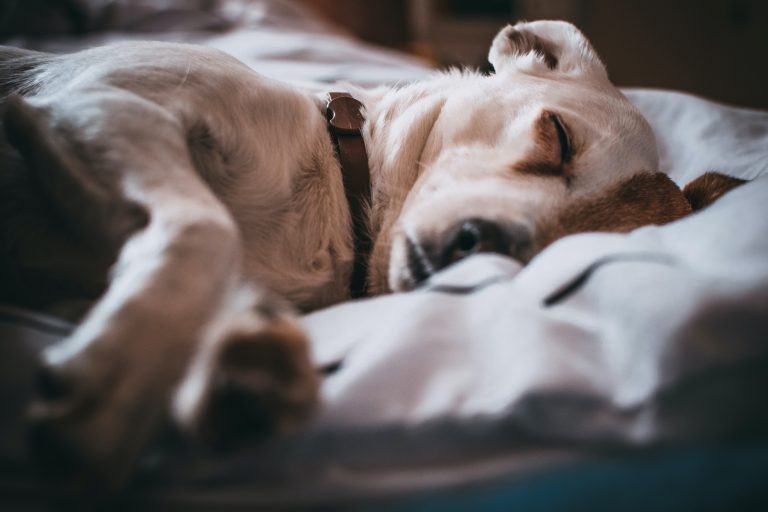
3. Time for Rest and Sleep
Rest is another important part of a dog’s daily routine.
Dogs spend a considerable amount of time sleeping and resting, although the amount varies between individual dogs and different life stages.
Having a familiar place where your dog can settle down can help establish a clear distinction between active and quiet parts of the day.
After a walk or play session, for example, your dog may naturally settle down for some rest.
Try to avoid constantly disturbing your dog when they have chosen to rest.
4. Routine Can Make Life More Predictable
Imagine waking up every morning with no idea what is going to happen that day.
For your dog, the human world is already full of unfamiliar things. A regular routine can provide some consistency within that environment.
They may learn that:
Breakfast → walk → rest → play → evening meal → bedtime
Of course, real life doesn’t always follow such a neat pattern. That’s perfectly normal.
The aim isn’t to create a timetable that can never change. Instead, it’s to establish familiar patterns that your dog can recognise.
5. Routine Can Help With Training
Consistency is particularly useful when you’re teaching your dog new behaviours.
If everyone in the household uses the same commands and follows the same rules, it can be easier for your dog to understand what is expected.
For example, if one person allows the dog on the sofa while another person consistently tells them to get down, the rules can become confusing.
A consistent approach from everyone in the household can make training much easier to manage.
6. Include Plenty of Enrichment
A good routine shouldn’t consist entirely of meals and walks.
Dogs also benefit from opportunities to explore, play and interact with their surroundings.
Enrichment could include:
- Playing with toys
- Training exercises
- Sniffing games
- Puzzle feeders
- Searching for hidden treats
- Exploring different walking routes
- Spending time with family members
Changing the activities while keeping some structure around them can give your dog both predictability and variety.
7. Don’t Forget Social Time
For many dogs, spending time with their owners is an important part of the day.
That doesn’t necessarily mean constant attention. Simply being in the same room, having a short play session or spending time together after a walk can become part of your dog’s normal routine.
Dogs are individuals, so some will want more interaction than others.
Learning your dog’s preferences can help you create a routine that works for both of you.
8. Create a Consistent Bedtime
A regular bedtime can help bring the day to an end.
You might establish a simple evening routine such as:
- Evening meal
- Relaxed time with the family
- Final trip outside
- Quiet time
- Bed
Over time, your dog may begin to recognise these familiar signals as part of the end-of-day routine.
Does a Dog’s Routine Have to Be Exactly the Same Every Day?
No.
This is an important point.
A good routine should make life easier, not become a source of stress for the owner.
Work commitments, weekends, holidays and unexpected events mean that your dog’s schedule will sometimes change.
That’s perfectly normal.
The goal is to provide consistency where practical, while allowing your dog to adapt to normal changes in everyday life.
For example, if your usual walk is at 7am but you occasionally go out at 8am on a Sunday, that’s unlikely to be a problem.
How to Establish a Routine for Your Dog
If your dog’s current schedule is unpredictable, there’s no need to change everything overnight.
Start with a few simple habits.
Step 1: Choose Regular Mealtimes
Pick feeding times that fit your lifestyle and try to keep them reasonably consistent.
Step 2: Establish Regular Walks
Build walks into your normal day rather than treating them as something you have to squeeze in whenever possible.
Step 3: Create Rest Periods
Give your dog somewhere comfortable where they can settle down without being constantly disturbed.
Step 4: Add Play and Enrichment
Include some time each day for games, training or activities your dog enjoys.
Step 5: Establish an Evening Routine
A predictable wind-down period can help signal that the active part of the day is coming to an end.
What Happens When Your Dog’s Routine Changes?
Sometimes routines have to change.
You might:
- Move house
- Change your working hours
- Go on holiday
- Introduce a new pet
- Have visitors
- Change your dog’s feeding schedule
- Start a new exercise routine
When possible, introduce major changes gradually rather than changing everything at once.
Maintaining some familiar elements of your dog’s routine can also make the transition easier.
For example, even if you’re away from home, keeping familiar feeding times and bringing your dog’s usual food, bed and favourite toys can provide some continuity.
Routine and Holidays
Holidays can be exciting for everyone, but they can also completely change your dog’s normal routine.
If you’re travelling with your dog, try to maintain some familiar habits where practical.
Take their usual food, bowls and bedding, and try to maintain familiar feeding and walking patterns.
Our article on [keeping your dog hydrated throughout the year] also has useful advice if you’re travelling or spending more time outdoors.
Routine and Feeding
A consistent feeding routine works particularly well when combined with an understanding of your dog’s food.
Different foods can have different nutritional densities, so you shouldn’t assume that the same volume of every food provides the same amount of energy.
Always follow the feeding instructions for the specific food you’re using.
Our guide to [How to Read a Pet Food Label] explains how to understand feeding information, ingredients and nutritional analysis.
It’s also worth remembering that treats count as part of your dog’s overall daily intake.
If you regularly use treats during training, our guide to [How to Read Dog Treat Labels] can help you understand what you’re buying.
A Simple Example of a Dog’s Daily Routine
Every household is different, but here’s an example of what a simple routine might look like:
7:00am — Morning
Outside for a toilet break followed by breakfast.
8:00am — Walk
A morning walk and some time to explore.
10:00am — Rest
Quiet time at home while the family gets on with their day.
1:00pm — Enrichment
A short training session, play session or garden activity.
5:30pm — Evening Walk
Another opportunity for exercise and exploration.
6:30pm — Evening Meal
Dinner followed by some relaxed family time.
9:30pm — Wind Down
Quiet time and a final trip outside before bed.
This is only an example. The right routine depends entirely on your household and your dog.
The Best Routine Is One You Can Stick To
There’s no point creating a perfect-looking schedule that becomes impossible to maintain after a week.
A simple routine that fits naturally around your lifestyle is much more practical.
Think about the things your dog needs every day:
- Food
- Fresh water
- Exercise
- Rest
- Toilet breaks
- Play
- Enrichment
- Social interaction
Then build these into your normal day.
Frequently Asked Questions
Why is routine important for dogs?
Routine provides dogs with familiar patterns and helps make their day more predictable. Regular feeding, exercise, rest and interaction can all form part of a consistent daily routine.
Do dogs like having a routine?
Many dogs become accustomed to regular daily patterns. However, routines don’t need to be rigid, and dogs can adapt to changes in their normal schedule.
What should a dog’s daily routine include?
A dog’s routine can include regular meals, fresh water, exercise, toilet breaks, rest, play, enrichment and time with their owners.
Should I feed my dog at the same time every day?
Many owners find that feeding at consistent times works well. The most important thing is to follow the feeding guidance for the food you’re using and establish a routine that suits your dog and household.
Can I change my dog’s routine?
Yes. Routines sometimes need to change because of work, holidays, travel or other circumstances. Where possible, introduce significant changes gradually and keep some familiar elements of your dog’s day.
Does routine need to be exactly the same every day?
No. A routine is about creating familiar patterns rather than following an exact timetable. Normal variations are a natural part of everyday life.
Final Thoughts
A good routine doesn’t need to be complicated or rigid.
Regular meals, fresh water, exercise, rest, play and time together can provide a simple structure that fits naturally into your dog’s everyday life.
The key is consistency rather than perfection. Build a routine that works for your dog, your household and your lifestyle, while still allowing plenty of flexibility for weekends, holidays and unexpected changes.
After all, some of the best parts of being a dog owner are the little routines you share every day — the morning greeting, the familiar walk, dinner time and settling down together at the end of the day.